Pages

Showing posts with label Business. Show all posts

Monday, September 11, 2017

Asian Shares and US Dollar Rise As Korea Tensions Ease


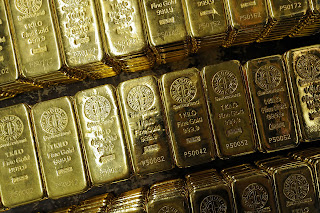
The US dollar is up while the Treasuries retreated and stocks rise as an appetite for risk returned to global markets after an anticipated North Korean missile test failed to materialize and Hurricane Irma struck the U.S. with less force than feared. Gold, the yen and Swiss franc all fell.

Bloomberg’s dollar index was headed for the first increase in eight days, while U.S. stock futures rose and Treasuries slipped after Irma weakened and shifted direction to spare Miami a direct hit. The Stoxx Europe 600 Index jumped the most in more than a week as all the region’s major stock gauges advanced and almost every sector gained. Earlier, equities across Asia traded in the green. Oil advanced as Gulf Coast refining capacity continued to recover after getting hit by Harvey.

Pyongyang warned of retaliation if the UN Security Council approves harsher sanctions over its recent nuclear test in a vote on Monday. The regime “is closely following the moves of the U.S. with vigilance,” the North’s state-run Korean Central News Agency said Monday.

“The better risk environment has seen Treasury yields move higher while the yen retreated,” wrote Chris Scicluna, head of economic research at Daiwa Capital Markets in London in a client note. Hurricane Irma appears “not to be quite as catastrophic as had been feared last week” and “thankfully there was no bad weekend news out of North Korea either,” he said.

Chinese stocks closed on a steady note after August inflation data released over the weekend came in better than expected, mainly on account of higher material costs.

The benchmark Shanghai Composite index rose 11.18 points or 0.33 percent to 3,376.42 while Hong Kong's Hang Seng index was up over 1 percent at 27,954 in late trade.

Japanese shares closed at their highest level in more than a week as the dollar recovered from a 10-month trough against the yen and data showed Japanese core machinery orders rose in July at the fastest pace since January 2016.

The Nikkei average jumped 270.95 points or 1.41 percent to 19,545.77, led by gains in recently battered automakers and financial stocks. The broader Topix index closed 1.17 percent higher at 1,612.26.

Australian shares rose sharply as banks and energy stocks rallied, helping more than offset weakness in the mining sector.

The benchmark S&P/ASX 200 index jumped 40.50 points or 0.71 percent to 5,713.10 while the broader All Ordinaries index finished 35.70 points or 0.62 percent higher at 5,775.10.


Car Dash Cam Z-Edge Z3 3-Inch 2K Ultra Full HD Sale: $99.99
Cell Phone Holder for Car $12.99
EJ's SUPERCAR Car Interior Atmosphere Neon Lights Strip $13.59
Mictuning Universal Car Seat Storage Mesh $7.99
Tools of Life (TM) Car Hammer Seatbelt Cutter Window Breaker Emergency Escape Tool $5.65
Ampper Blind Spot Mirror, 2" Round HD Glass Convex Rear View Mirror $7.90

Wednesday, August 9, 2017

Investors More Worried About US Despot Trump Than North Korea's Kim


U.S. President Donald Trump is a bigger concern to financial markets than North Korean dictator Kim Jong Un -- judging by traders’ reactions this year.

South Korea’s Kospi stock index was down 0.8% in afternoon trading Wednesday, hours after Trump told reporters “North Korea best not make any more threats to the United States,” Trump told reporters in Bedminster, New Jersey. “They will be met with fire, fury and, frankly, power the likes of which this world has never seen before.”

Traders in Seoul, about 24 miles from the border with the nuclear-armed North, also took the won down 0.9 percent. That’s a bigger reaction than after North Korean provocations:

  •     Kospi fell 0.6% and won dropped 0.3% on July 4 after North Korea warned it would make an important announcement (which turned out to be an ICBM launch)
  •     Kospi rose 0.1% and won gained 0.3% on July 31, the first trading day after the second ICBM launch
Investors have decades of experience observing North Korean threats. But with Trump, they’re still learning to deal with his unpredictable reactions.


The Anti-Procrastination Habit: A Simple Guide to Mastering Difficult Tasks $0.99

Courageous World Catalysts: 36 Inspirational Stories by Changemakers on their Missions for Global Impact $0.99

Barking up the Wrong Tree: The Surprising Science Behind Why Everything You Know About Success Is (Mostly) Wrong FREE AUDIOBOOK trial

Of Mess and Moxie: Wrangling Delight Out of This Wild and Glorious Life $11.99

Wonder by R. J. Palacio  $9.87


Tuesday, July 25, 2017

US Dollar falls to 13-month lows, Asian stocks sag

Business, finance, forex, US dollar, wall street


The US dollar was down to a 13-month low on Tuesday against a basket of major currencies, extending recent declines as investors positioned for a Federal Reserve meeting starting later in the day.

Undermining the case for a Fed rate increase in coming months, the dollar has been hit by weak U.S. data that has contrasted with an improving economic outlook in Europe and China.

The dollar fell 0.1% to 110.99 yen JPY=D4 on Tuesday, after touching a six-week low of 110.65 yen on Monday.

The dollar index .DXY, which tracks the greenback against a basket of six major peers, pulled back a little to 93.919 on Tuesday. It still remained above Monday's low of 93.823, its lowest level since June 2016.

Japan's Nikkei 225 index slipped by 0.1% to 19,955.20 and Hong Kong's Hang Seng fell 0.1% to 26,825.91. South Korea's Kospi sank 0.5% 2,438.50. Australia's S&P ASX 200 gained 0.7% to 5,726.60 and the Shanghai Composite index slipped 0.3% to 3,420.25. India's Sensex lost 0.1% to Shares in Southeast Asia were mixed.


Friday, June 16, 2017

US Tech Stocks Slips, Asia Stocks Stable


Business, finance, stocks, US tech stock market

The five largest U.S. technology companies have lost enough market capitalization over the past week, Apple <AAPL.O., Alphabet (GOOGL.O), Microsoft (MSFT.O), Amazon (AMZN.O) and Facebook (FB.O), their combined market capitalization fall by about $120 billion since last Thursday. By Thursday the S&P 500 technology index .SPLRCT had seen its largest five-day drop in a year.

The slip was again led by sector heavyweights Apple and Alphabet, as investors moved away from what had been the year's best-performing sector and rotated portfolios into stocks that pay higher dividends amid some signs that U.S. economic weakness.

Despite the rout, Asian stocks remained stable  on Friday, and European shares look set for a positive start following Thursday's losses.

The Japanese yen remained near a two-week low against the dollar after the Bank of Japan left monetary policy unchanged as expected even as its U.S. counterpart signaled further tightening.

Japan's Nikkei .N225 were up by 0.7% , narrowing its loss for the week to 0.3%. MSCI's broadest index of Asia-Pacific shares outside Japan .MIAPJ0000PUS slipped about 0.1%, on track to end the week down 0.85%.  

South Korea's KOSPI .KS11 was down by about 0.1%, losing early gains. The biggest company, Samsung Electronics (005930.KS) advances by 0.1%.

Taiwan index .TWII were up by 0.6%, with the biggest company, Taiwan Semiconductor Manufacturing Co. (2330.TW) jumping 1.7% and Apple supplier Hon Hai Precision Industry (2317.TW) surging 2.5%.

Thursday, May 11, 2017

Bitcoin Breaches $1,800 for the first time, still rising

Bitcoin, business, crypto currency


Bitcoin breaches $1,800 for the first time on Thursday adding more than $100 in just two days. The rally in bitcoin has been driven by a number of factors such as positive noises from policymakers as well as the legalization of the cryptocurrency in Japan.

The price of the digital currency was trading at around $1,824 by early morning in London, according to Coindesk's bitcoin price index. It breached $1,700 for the first time on Tuesday.

Since Monday, the market capitalization of bitcoin has risen over $3 billion to $29.53 billion. The price of bitcoin has soared 81% since the start of the year.

Bitcoin surpassed $1,800 on Thursday to a fresh record high, rising more than $100 in just two days, driven by comments from policy makers and positive noises around the future of the cryptocurrency.

The price of the digital currency was trading at around $1,824 by early morning in London, according to Coindesk's bitcoin price index. It breached $1,700 for the first time on Tuesday.

Since Monday, the market capitalization of bitcoin has risen over $3 billion to $29.53 billion. The price of bitcoin has soared 81 percent since the start of the year.

The latest price driver was comments from Minneapolis Federal Reserve Bank President Neel Kashkari. The policymaker talked up the potential of blockchain – the technology that underpins bitcoin.

"I would say I think conventional wisdom now is that blockchain and the underlying technology is probably more interesting and has more potential than maybe bitcoin does by itself," Kashkari said at a technology conference, according to Reuters.

His comments are the latest in a growing number of officials that have supported bitcoin and blockchain technology, helping to bring it more into the mainstream.

Japan legalized the cryptocurrency as a payment method recently and this has led to a greater amount of bitcoin being bought with yen, which is helping to support the price.

At the same time, Russia, one of the strongest opponents of bitcoin is seeking to regulate the digital currency.

HERE ARE WAYS TO MAKE BITCOIN MONEY FOR FREE ONLINE

Friday, April 28, 2017

Amazon's Earnings Soar Beat Estimates


Amazon dot com, business, finance

- Amazon's Operating cash flow increased by 53% to $17.6 billion for the past 12 months.
- The company's Net sales is up by 23% to $35.7 billion in the first quarter.
- Guidance for second quarter net sales looks very good.
- Prime is getting more features and more users.

Last Thursday April 27, after the market closed, Amazon (NASDAQ:AMZN) released their first quarter earnings for 2017 and they not only did they meet their already high expectations, they shattered them. It was predicted that they will have 1.12 per share; Amazon obliterated this expectation reporting $1.48 Earnings Per Share.

Amazon.com Inc's (AMZN.O) retail and cloud-computing sales rose in the first quarter, inching above Wall Street's expectations and sending the company's shares to an all-time high in extended trading.

Amazon's revenue has soared in recent years, as people's shopping has shifted online and businesses have moved their IT to the cloud where Amazon Web Services (AWS) is the biggest player.

Amazon Prime, which offers fast shipping and video streaming to members, helped raise the company's subscription sales by 52% in the first quarter. Sign ups are key to Amazon's strategy because Prime encourages shoppers to buy more goods, more often.


JOIN Amazon Prime NOW and enjoy an exclusive Prime member discount.
FREE TRIAL HERE


Monday, February 13, 2017

Shares in Asia Inched to a 19-month Highs

asian stocks, stock market, finance, economy, business


Asian shares eke out 19-month highs on Tuesday as the potential for economic stimulus in the United States underpinned the dollar, bond yields and Wall Street stocks.

However, markets are still shaky since experts says that it his highly likely that the Federal Reserve, will have two or more U.S. interest rate hikes this year. U.S. Federal Reserve Chairwoman Janet Yellen will have an upcoming congressional testimony later in the global trading day.

Japanese shares also ran into trouble after Toshiba Corp (6502.T) delayed an anxiously-awaited earnings release, including details of a multibillion dollar charge related to cost overruns at its U.S. nuclear arm.

Japan’s Nikkei Stock Average NIK, -1.13%   was down 0.1%, Hong Kong’s Hang Seng Index HSI, -0.06%   was off 0.3% and Korea’s Kospi SEU, -0.22%   slipped 0.1%.

Singapore’s Strait Times Index STI, -1.19%   was down 0.9% after three days of gains, as concerns about bank earnings cut into sentiment. Oversea-Chinese O39, -3.28%   dropped 2.7% following weak fourth-quarter earnings. DBS D05, -2.96%   and United Overseas Bank U11, -1.52%   which report later this week, fell 2.1% and 0.7%, respectively. Australia’s S&P/ASX 200 XJO, -0.10%   was up 0.4% and New Zealand’s NZX-50 NZ50GR, +0.22%   was 0.4% higher.

In the U.S. overnight, the Dow Jones Industrial Average, the S&P 500, the Nasdaq Composite and the Russell 2000 all reached record highs which is a clear sign that Donald Trump is good for the economy!


Friday, December 9, 2016

Gold Slump Again, On Worst Losing Streak in 2016

gold prices, swiss gold


Gold prices slumped on Friday and it is on its way to a 5th straight weekly decline. As it get hit from all directions. The gold prices are being pulled down by a stronger U.S. dollar and expectations of a Federal Reserve rate hike next week. U.S. equities are also at record levels luring money out of the safe haven and fund holdings wither. The S&P 500 and the Dow Jones Industrial Average are at all-time highs amid speculation President-elect Donald Trump’s policies will spur growth. Investors are also assessing the European Central Bank’s decision on Thursday to tweak its bond buying.

Spot gold was down 0.3% at $1,167.11 an ounce by 0245 GMT, and was set for a weekly decline of about 0.8%. U.S. gold futures lost 0.2% to $1,169.60 per ounce. The dollar held large gains against the yen and euro early on Friday.

The number of Americans filing for unemployment benefits fell from a five-month high last week, pointing to labour strength that underscores the economy's sustained momentum and reinforcing the case for a Federal Reserve rate increase.

Rising bond yields and a flight to stock markets have also dampened the appeal of gold.

Meanwhile, Asian shares edged down on Friday but were on track for robust weekly gains, while the euro became more settled after the volatility seen in the wake of the European Central Bank's decision to trim the size of its asset purchase program while also extending it for longer than many analysts had expected.

Holdings of the SPDR Gold Trust, the world's largest gold-backed exchange-traded fund, fell 0.34% to 860.71 tonnes on Thursday. SPDR holdings have fallen nearly 9% since November and are on track for a 5th straight week of losses.

Elsewhere, silver was down 0.4% at $16.94 an ounce and platinum fell 0.9% at $930.10.

Palladium was down by 0.2% to $734, after reaching its lowest since November 18 in the previous session.


Saturday, November 12, 2016

It Seems Investors Like Trump Presidency U.S. stocks are Up Friday

business, finance, economy


U.S. stocks closed mostly on a higher note on Friday as a postelection rally lost some steam. Losers includes Energy, health care and materials companies while Consumer goods, technology and financials stocks closed on gains. The S&P 500 index still had its best weekly gain in two years.

The Dow Jones industrial average climbed 39.78 points, or 0.2%, to 18,847.66. Last Thursday it hit a new all-time intraday of 18,873.6, and closed more than 200 points higher, with IBM and Goldman Sachs contributing the most gains to the tune of 34 points and 52 points, respectively.  The Standard & Poor's 500 index fell 3.03 points, or 0.1%, to 2,164.45 still it's up 79.27 points, or 3.8% for the week.

The Nasdaq composite rose 28.32 points, or 0.5%, to 5,237.11.


Tuesday, October 4, 2016

Asian shares rise led by Tokyo, dollar firms after upbeat U.S. data

finance, business, world


Asian stock markets closed mostly higher Tuesday, with Japanese markets leading the way as solid U.S. manufacturing data helped bolstered the U.S. dollar and weaken the yen.

The Nikkei Stock Average NIK, +0.83%  was up 0.8%, Korea’s Kospi SEU, +0.55%  was up by 0.4% and Singapore’s FTSE Straits Times Index added 0.2%. Chinese markets are shut for the week. Hong Kong’s Hang Seng Index HSI, +0.28%  , however, reversed early gains and end up flat.

The U.S. September purchasing managers’ index which is a key measure of factory activity—jumped to 51.5, shifting back into expansionary territory, following a surprise dip to 49.4 in August. The dollar index, which tracks the greenback against a basket of 6 major currencies, added 0.3% to 95.970 .DXY.

However, the up trend is unlikely to happen in Europe, where German markets will reopen after a holiday to rekindled fears about the stability of the country's largest lender.

U.S. stocks slumped overnight, with Deutsche Bank (DB.N) shares resuming their slide as hopes faded that the bank would reach a swift deal with the U.S. Department of Justice over a fine of up to $14 billion for mis-selling mortgage-backed securities.

Australian shares closed at 0.1% higher after Australia's central bank kept its cash rate steady at 1.5% on Tuesday, a widely expected decision as it assesses the impact of its May and August rate cuts.

Tuesday, September 13, 2016

U.S. household income up by 5.2% in 2015 but still poorer than it was 15 years ago

economy, business, jobs

The Middle-class Americans and the poor American families have experience their first gain in eight years. The Census Bureau reported Tuesday, that the median household income rose 5.2% from a year earlier, after adjusting for inflation, or $2,800, to $56,500. The rise broke a long streak of disappointment for American workers but did not fully repair the damage inflicted by the Great Recession. The household incomes now is around 1.6% below the 2007 level, before the last recession began, and around 2.4% below the all-time high reached in 1999.

Officials at the Census Bureau said that the 5.2% growth rate was not statistically distinguishable from five other previous increases in the data over a 50-year period, most recently the 3.7 percent jump from 1997 to 1998.

There are some statistics that suggested that the year 2015 was strong for US workers. Just last week, the Agriculture Department reported their yearly data on hunger in the United States. It shows that food insecurity declined substantially last year for the first time since the recession.

Economic growth has lagged in 2016, but the labor market has remained strong, suggesting continued income gains. The unemployment rate declined to 4.9% last month. Adjusted for inflation, wages for full-time workers were up by nearly 2% in the first half of the year, compared with the same point in 2015.

The University of Michigan’s consumer sentiment index is down from last year.


Monday, August 22, 2016

Stock in Asia Mixed as Oil Prices Fall and Dollar Loses Ground

Business, Finance, stocks, world economy

Asian Shares gave mixed results on Tuesday, as oil prices fell and the U.S. dollar weakened ahead of a key meeting of Federal Reserve officials and other central bankers later this week.

The Nikkei Stock Average lost 0.4%, while Australia’s S&P/ASX 200 were up by 0.8%. Hong Kong’s Hang Seng Index was down by 0.3%, while the Shanghai Composite Index gained 0.2%. The FTSE Bursa Malaysia KLCI was down 0.1%.

Crude-oil prices sank below $47 a barrel in New York overnight on skepticism the Organization of the Petroleum Exporting Countries (OPEC) would reach a deal to cut production, sending commodity stocks in Japan sharply lower. Oil explorer Inpex was down 1.9%, while Japan Petroleum Exploration slid 3.4%. Brent crude, the global benchmark, was recently down 1% from the previous close to $48.67 a barrel, a five-day low.

Copper three-month futures on the London Metal Exchange hovered near six-week lows, and share prices of mining companies on Australia’s benchmark index rose.

U.S. dollar slipped against other major currencies as the yield on the 10-year U.S. Treasury note fell to 1.55% from around 1.60%. The U.S. dollar index was recently down 0.1%. The yen rose 0.1% against the dollar, adding to pressure on Japanese exporters by making them less competitive, with auto makers Honda Motor falling 2.1% and Mazda Motor shedding 3% of its value.

BRAIN SUPPLEMENT

Friday, August 12, 2016

Macy's to close 100 stores, Legacy Retailers Hit Hard by Online Discount Stores

Macys, retailers, business


A lot of top retailers in the U.S. are feeling the heat, yes American consumer are still buying but they don't want to pay the full price and they want to shop at home. Legacy stores has been hit hard by this consumer shift. Macy’s, the largest department store in the U.S., announced on Thursday that they would close 100 stores. The company said that they were more valuable as real estate properties. The department store chain continues to shrink.

Well, all is not lost. Macy's has a plan and they also announced a series of strategic changes to lure shoppers.  The plan includes bringing in more brand shops within the stores, improving online search and ordering and hosting in-store events to drive foot traffic.

The closure of 100 store is 15% of Macy's 675 full-line locations. It is only the latest round of closures Macy's has undertaken in recent years to rid the company of unprofitable stores. The company didn't identified the locations of stores that will close, but said they represent about $1 billion in annual sales, excluding sales the company expects to retain online or at nearby stores. That's nearly 4% of Macy's total annual sales in 2015.

Investors were happy about the latest news that send Macy's stock up 17% on Thursday to $39.81 a share, up $5.81. Still, the stock is down about 40% from its 52-week high.

Also Walmart, the world’s largest retailer, said on Monday that they would purchase a small online rival for more than $3 billion. The hope is that the deal will reverse its sputtering online growth.


Friday, July 29, 2016

Google AD Business is Surging

google ads, business, economy


Google parent company the Alphabet Inc. reported their quarterly profit that surge 24%, these surge is driven by consumers’ rapid shift to mobile devices.

The company said that more companies are continuing to buy more ads on its search engine and other products, while users due to mischievous Google techniques unknowingly clicked on those ads. Revenue, fueled by Google’s advertising business, rose 21% to $21.5 billion in the second quarter from a year ago, beating analysts’ average estimate of $20.76 billion.

With the continued increase of smartphones that are connected by internet more and more people worldwide are boosting internet use and in effect it is also increasing people who use the free services of Google and Facebook Inc.

Alphabet stock, which struggled and went down by 1.6% in 2016 through Thursday’s close, jumped 4% in after-hours trading. The company had recently struggled to meet investor expectations, with earnings missing analysts’ estimates in eight of the past 12 quarters.

Facebook, Google’s chief rival, also is gaining strength from mobile. Facebook said Wednesday that its second-quarter profit nearly tripled from a year earlier to $2.1 billion, easily beating Wall Street estimates. Mobile accounted for 84% of its $6.2 billion in second-quarter advertising sales.

While Google still controls about 31% of the roughly $187 billion world-wide digital-ad market, Facebook’s market share has risen to 12% from 8.6% in 2014, according to research firm eMarketer.


Friday, July 22, 2016

S&P 500 hits new record high close as stocks rally for 4th week

S&P, stocks, US stocks, business, finance


The technology and commodity stocks and in the driver seat and they are leading the S&P 500 Index for the first time in this last two months. Computer and software companies were the best group in this week trade they powered the benchmark gauge for American equity to a record and its fourth straight weekly advance.

The S&P 500 finished at a new record high close on Friday with the broader market gaining for a fourth week in a row as stocks bounced back from Thursday’s correction. The S&P 500 index rose 10 points, or 0.5%, to end at 2,175 for a weekly gain of 0.6%. The Dow Jones Industrial Average gained 53 points, or 0.3%, to close at 18,570, adding 0.3% for the week. The Nasdaq Composite Index advanced 26 points, or 0.5%, to finish at 5,100, closing the week 1.4% higher.


Wednesday, July 13, 2016

Shares in Asia Continue its Gains as risk appetite improves

Nikkei Stock Average


Asian equity markets continue making gains and they are within reach of their 2016 highs on Wednesday as the anticipation of solid U.S. growth and likelihood that Japan may consider an aggressive form of policy easing to boost their economy brightens investors outlook despite the damaged done by uncertainty from Brexit.

The Nikkei Stock Average was up 1%, paring earlier gains, while the yen changed tack to trade 0.6% stronger against the U.S. dollar. Earlier Wednesday, the Nikkei had recovered all its losses from before the Brexit vote when the index was up 1.6%.

MSCI's broadest index of Asia-Pacific shares outside Japan .MIAPJ0000PUS rose as much as 0.4% to 427.83, just below its year-to-date high of 428.22 hit on April 21.

Australian stocks added 0.5% and South Korea's Kospi .KS11 rose 0.6% New Zealand shares .NZ50 inched down 0.1% but were near a record high struck Tuesday. Shanghai .SSEC advanced 0.4%.

"A while ago, everything looked so uncertain on Brexit. But now that the UK looks set to have a new prime minister ... that is soothing investor sentiment," said Masahiro Ichikawa, senior strategist at Sumitomo Mitsui Asset Management.

Britain's interior minister Theresa May is set to take over as prime minister on Wednesday.

Elsewhere, Philippine shares .PSI reached a more than 1-year high and Vietnam .VNI scaled an 8-year peak.

In commodities, oil prices dropped after industry group American Petroleum Institute (API) reported a surprise build of 2.2 million barrels in U.S. crude stockpiles last week.

Brent crude futures LCOc1 fell 1.2% to $47.90 after surging roughly 5% on Tuesday on broad improvement in risk sentiment.

Zinc CMZN3 touched a 13-month high of $2,210 a tonne and nickel climbed to a 10-month peak of $10,670 a tonne CMNI3. Aluminum and copper have also gained.

Monday, June 20, 2016

United States stocks rose sharply Amid Brexit Fears Ease

https://www.amazon.com/gp/search/ref=as_li_qf_sp_sr_il_tl?ie=UTF8&tag=mansbikandbey-20&keywords=make money&index=aps&camp=1789&creative=9325&linkCode=xm2&linkId=d3d3d2ef4cadc58c8ecdae00ad2e2070


With the positive news that the polls are leaning towards Britain remaining in the European Union, the United States stocks sharply rose.

Asian stocks also traded higher and indexes in Europe were up as the latest opinion polls and betting markets suggested it was more likely that Britain would stay in the E.U. Britons vote in a referendum on the matter on Thursday.

The British pound rose sharply, and investors dumped ultrasafe assets like American government bonds, gold and utility stocks, sending those prices lower. Machinery and consumer companies jumped, and energy companies rose with the price of oil.

- Standard & Poor’s 500-stock index up by 12.03 points, 0.6% to 2,083.25.
- The Nasdaq composite up by 36.88 points 0.8% to 4,837.21.
- The Dow Jones industrial average up by 129.71 points, 0.7% to 17,804.87.
- Boeing gained $2.93, or 2.3% to $132.75
- Honeywell up by $1.14, or 1% to $117.06.
- General Electric up by 23 cents to $30.83.
- Amazon up by $7.62, or 1.1% to $714.01,
- Priceline up by $32.72, or 2.5% to $1,341.96
- Nike rose 65 cents, or 1.2% to $54.36.
- Benchmark United States crude oil rose $1.39, or 2.9% to $49.37 a barrel
- Brent crude gained $1.48, 3% to $50.65 a barrel in London.
- Chevron up by $1.04, 1% to $102.61.
- Marathon Oil up by $1.32, 10% to $14.48, company agreed to pay $888 million for PayRock Energy.

Bond prices dropped as investors moved money out of ultrasafe assets. The yield on the 10-year Treasury note rose to 1.68 percent from 1.61 percent late Friday.

The FTSE 100 in Britain leapt 3 percent and the CAC 40 in France rose 3.5 percent. The German DAX was up 3.4 percent. Japan’s benchmark Nikkei 225 index surged 2.3 percent. The South Korean Kospi climbed 1.4 percent and in Hong Kong the Hang Seng added 1.7 percent.

In other energy trading, wholesale gasoline added 8 cents, to $1.58 a gallon. Heating oil edged up 5 cents, to $1.53 a gallon. Natural gas rose 12 cents, to $2.75 per 1,000 cubic feet.

Gold slipped $2.50, to $1,290 an ounce. Silver rose 10 cents, to $17.51 an ounce. Copper added 4 cents, to $2.09 a pound.

The pound rose to $1.4684 from $1.4361. The dollar fell to 103.86 yen from 104.21 yen and the euro rose to $1.1305 from $1.1277.


Thursday, June 9, 2016

U.S. Crude Reserves Fall, Oil Hits 2016 Highs


Oil has recorded near 10-Month high as U.S. crude stockpiles decline, U.S. oil inventories fell 3.23 million barrels last week. It was also affected by disruptions in producing countries like Canada and Nigeria.

Futures were stable in New York, it just recorded an earlier increase of 0.9%, after settling on Wednesday at the highest since July 15. Crude stockpiles dropped by 3.23 million barrels last week to the lowest in two months, the U.S. Energy Information Administration said on Wednesday. A new wildfire prompted Canadian oil producers Cenovus Energy Inc. and Canadian Natural Resources Ltd. to shut production.

Crude has surged more than 95% from a 12-year low in February amid unexpected disruptions and a steady slide in U.S. output, which is under pressure from the Organization of Petroleum Exporting Countries’ policy of pumping without limits. Militant attacks have hobbled production in OPEC member Nigeria.

West Texas Intermediate for July delivery traded 12 cents lower at $51.11 a barrel on the New York Mercantile Exchange as of 9:23 a.m. London time, having risen as much 44 cents to $51.67. Total volume traded was about 20 percent below the 100-day average. The contract rose 87 cents, or 1.7 percent, to close at $51.23 on Wednesday, the highest since July 15.

International Brent crude oil futures hit a high of $52.86 a barrel, and were up 23 cents at $52.74 a barrel at 0700 GMT. U.S. crude hit a fresh high of $51.67 and was up 33 cents higher at $51.56 a barrel.


Thursday, May 19, 2016

US Dollar is Up, Asian stocks and gold are Down

US Dollar, feds, Federal Reserves, money, finance, business

Due to the possibility of another interest rate increase by the Federal Reserve as early as June it push the US dollar sharply higher against major Asian currencies Thursday, with the Chinese yuan at its weakest level since February and the Japanese Yep losing its recent gains. The U.S. dollar index rallied to a two-month high.

Experts didn't expect the possibility of an interest-rate increase in June, but the latest Federal Reserve minutes, along with a batch of strong economic data, have changed that view.

Asian currencies falls into multi-month lows as traders adjusted positions to reflect the interest-rate expectations. The Indonesian rupiah fall to its three-month low, as did Thailand’s baht, while the South Korea won, the Philippine peso and the Singapore dollar fall into two-month low against the U.S. dollar.  The rise of the U.S. dollar also weakened the Japanese yen by nearly 1%.

MSCI's broadest index of Asia-Pacific shares outside Japan fall 1%, South Korea market fall by 0.6% while Australia were down by 0.8%.

Meanwhile, gold which are inversely correlated to monetary policy easing, fell 0.1% to a three-week low $1256 per ounce.

The stronger dollar also weighed on commodities such as oil, with U.S. crude futures losing 0.4% to $48.00 a barrel. A stronger dollar tends to put non-U.S. buyers of greenback-denominated commodities at a disadvantage.

Three-month copper on the London Metal Exchange fell to as low as $4563.50 overnight, the weakest since Feb. 19.

Wednesday, April 27, 2016

Facebook Proposes New Stock Class to Solidify Mark Zuckerberg’s Control

Facebook, business, finance, economy

Facebook is making major moves to ensure its founder Mark Zuckerberg remains in charge of the company. On Wednesday the company proposed a new class of stock named as "C shares", this will allow Mr. Zuckerberg to maintain control of the company. The new class of shares will enable the chief executive to protect and keep his voting power at the company, even as he begins an effort to give away the majority of his stock for charitable purposes.

Facebook said the move was “not a traditional governance model,” but it added that “Facebook was not built to be a traditional company.”

The company also revealed their first-quarter earnings, sales shoot up 52% to $5.3 billion from a year ago, Profit also increased to $1.5 billion from $512 million a year earlier. The company's profit was 77% a share, far surpassing Wall Street expectations of 62 cents a share.

First Quarter 2016 Other Financial Highlights
  •     Mobile advertising revenue – Mobile advertising revenue represented approximately 82% of advertising revenue for the first quarter of 2016, up from 73% of advertising revenue in the first quarter of 2015.
  •     Capital expenditures – Capital expenditures for the first quarter of 2016 were $1.13 billion.
  •     Cash and cash equivalents and marketable securities – Cash and cash equivalents and marketable securities were $20.62 billion at the end of the first quarter of 2016.
  •     Free cash flow – Free cash flow for the first quarter of 2016 was $1.85 billion.