Pages

Showing posts with label finance. Show all posts

Monday, September 11, 2017

Asian Shares and US Dollar Rise As Korea Tensions Ease


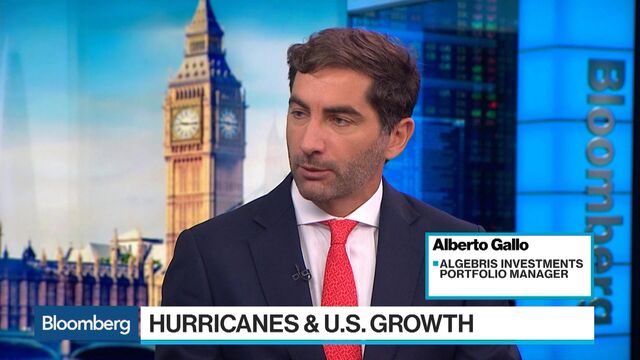
The US dollar is up while the Treasuries retreated and stocks rise as an appetite for risk returned to global markets after an anticipated North Korean missile test failed to materialize and Hurricane Irma struck the U.S. with less force than feared. Gold, the yen and Swiss franc all fell.

Bloomberg’s dollar index was headed for the first increase in eight days, while U.S. stock futures rose and Treasuries slipped after Irma weakened and shifted direction to spare Miami a direct hit. The Stoxx Europe 600 Index jumped the most in more than a week as all the region’s major stock gauges advanced and almost every sector gained. Earlier, equities across Asia traded in the green. Oil advanced as Gulf Coast refining capacity continued to recover after getting hit by Harvey.

Pyongyang warned of retaliation if the UN Security Council approves harsher sanctions over its recent nuclear test in a vote on Monday. The regime “is closely following the moves of the U.S. with vigilance,” the North’s state-run Korean Central News Agency said Monday.

“The better risk environment has seen Treasury yields move higher while the yen retreated,” wrote Chris Scicluna, head of economic research at Daiwa Capital Markets in London in a client note. Hurricane Irma appears “not to be quite as catastrophic as had been feared last week” and “thankfully there was no bad weekend news out of North Korea either,” he said.

Chinese stocks closed on a steady note after August inflation data released over the weekend came in better than expected, mainly on account of higher material costs.

The benchmark Shanghai Composite index rose 11.18 points or 0.33 percent to 3,376.42 while Hong Kong's Hang Seng index was up over 1 percent at 27,954 in late trade.

Japanese shares closed at their highest level in more than a week as the dollar recovered from a 10-month trough against the yen and data showed Japanese core machinery orders rose in July at the fastest pace since January 2016.

The Nikkei average jumped 270.95 points or 1.41 percent to 19,545.77, led by gains in recently battered automakers and financial stocks. The broader Topix index closed 1.17 percent higher at 1,612.26.

Australian shares rose sharply as banks and energy stocks rallied, helping more than offset weakness in the mining sector.

The benchmark S&P/ASX 200 index jumped 40.50 points or 0.71 percent to 5,713.10 while the broader All Ordinaries index finished 35.70 points or 0.62 percent higher at 5,775.10.


Car Dash Cam Z-Edge Z3 3-Inch 2K Ultra Full HD Sale: $99.99
Cell Phone Holder for Car $12.99
EJ's SUPERCAR Car Interior Atmosphere Neon Lights Strip $13.59
Mictuning Universal Car Seat Storage Mesh $7.99
Tools of Life (TM) Car Hammer Seatbelt Cutter Window Breaker Emergency Escape Tool $5.65
Ampper Blind Spot Mirror, 2" Round HD Glass Convex Rear View Mirror $7.90

Wednesday, August 9, 2017

Investors More Worried About US Despot Trump Than North Korea's Kim


U.S. President Donald Trump is a bigger concern to financial markets than North Korean dictator Kim Jong Un -- judging by traders’ reactions this year.

South Korea’s Kospi stock index was down 0.8% in afternoon trading Wednesday, hours after Trump told reporters “North Korea best not make any more threats to the United States,” Trump told reporters in Bedminster, New Jersey. “They will be met with fire, fury and, frankly, power the likes of which this world has never seen before.”

Traders in Seoul, about 24 miles from the border with the nuclear-armed North, also took the won down 0.9 percent. That’s a bigger reaction than after North Korean provocations:

  •     Kospi fell 0.6% and won dropped 0.3% on July 4 after North Korea warned it would make an important announcement (which turned out to be an ICBM launch)
  •     Kospi rose 0.1% and won gained 0.3% on July 31, the first trading day after the second ICBM launch
Investors have decades of experience observing North Korean threats. But with Trump, they’re still learning to deal with his unpredictable reactions.


The Anti-Procrastination Habit: A Simple Guide to Mastering Difficult Tasks $0.99

Courageous World Catalysts: 36 Inspirational Stories by Changemakers on their Missions for Global Impact $0.99

Barking up the Wrong Tree: The Surprising Science Behind Why Everything You Know About Success Is (Mostly) Wrong FREE AUDIOBOOK trial

Of Mess and Moxie: Wrangling Delight Out of This Wild and Glorious Life $11.99

Wonder by R. J. Palacio  $9.87


Tuesday, July 25, 2017

US Dollar falls to 13-month lows, Asian stocks sag

Business, finance, forex, US dollar, wall street


The US dollar was down to a 13-month low on Tuesday against a basket of major currencies, extending recent declines as investors positioned for a Federal Reserve meeting starting later in the day.

Undermining the case for a Fed rate increase in coming months, the dollar has been hit by weak U.S. data that has contrasted with an improving economic outlook in Europe and China.

The dollar fell 0.1% to 110.99 yen JPY=D4 on Tuesday, after touching a six-week low of 110.65 yen on Monday.

The dollar index .DXY, which tracks the greenback against a basket of six major peers, pulled back a little to 93.919 on Tuesday. It still remained above Monday's low of 93.823, its lowest level since June 2016.

Japan's Nikkei 225 index slipped by 0.1% to 19,955.20 and Hong Kong's Hang Seng fell 0.1% to 26,825.91. South Korea's Kospi sank 0.5% 2,438.50. Australia's S&P ASX 200 gained 0.7% to 5,726.60 and the Shanghai Composite index slipped 0.3% to 3,420.25. India's Sensex lost 0.1% to Shares in Southeast Asia were mixed.


Friday, June 16, 2017

US Tech Stocks Slips, Asia Stocks Stable


Business, finance, stocks, US tech stock market

The five largest U.S. technology companies have lost enough market capitalization over the past week, Apple <AAPL.O., Alphabet (GOOGL.O), Microsoft (MSFT.O), Amazon (AMZN.O) and Facebook (FB.O), their combined market capitalization fall by about $120 billion since last Thursday. By Thursday the S&P 500 technology index .SPLRCT had seen its largest five-day drop in a year.

The slip was again led by sector heavyweights Apple and Alphabet, as investors moved away from what had been the year's best-performing sector and rotated portfolios into stocks that pay higher dividends amid some signs that U.S. economic weakness.

Despite the rout, Asian stocks remained stable  on Friday, and European shares look set for a positive start following Thursday's losses.

The Japanese yen remained near a two-week low against the dollar after the Bank of Japan left monetary policy unchanged as expected even as its U.S. counterpart signaled further tightening.

Japan's Nikkei .N225 were up by 0.7% , narrowing its loss for the week to 0.3%. MSCI's broadest index of Asia-Pacific shares outside Japan .MIAPJ0000PUS slipped about 0.1%, on track to end the week down 0.85%.  

South Korea's KOSPI .KS11 was down by about 0.1%, losing early gains. The biggest company, Samsung Electronics (005930.KS) advances by 0.1%.

Taiwan index .TWII were up by 0.6%, with the biggest company, Taiwan Semiconductor Manufacturing Co. (2330.TW) jumping 1.7% and Apple supplier Hon Hai Precision Industry (2317.TW) surging 2.5%.

Friday, April 28, 2017

Amazon's Earnings Soar Beat Estimates


Amazon dot com, business, finance

- Amazon's Operating cash flow increased by 53% to $17.6 billion for the past 12 months.
- The company's Net sales is up by 23% to $35.7 billion in the first quarter.
- Guidance for second quarter net sales looks very good.
- Prime is getting more features and more users.

Last Thursday April 27, after the market closed, Amazon (NASDAQ:AMZN) released their first quarter earnings for 2017 and they not only did they meet their already high expectations, they shattered them. It was predicted that they will have 1.12 per share; Amazon obliterated this expectation reporting $1.48 Earnings Per Share.

Amazon.com Inc's (AMZN.O) retail and cloud-computing sales rose in the first quarter, inching above Wall Street's expectations and sending the company's shares to an all-time high in extended trading.

Amazon's revenue has soared in recent years, as people's shopping has shifted online and businesses have moved their IT to the cloud where Amazon Web Services (AWS) is the biggest player.

Amazon Prime, which offers fast shipping and video streaming to members, helped raise the company's subscription sales by 52% in the first quarter. Sign ups are key to Amazon's strategy because Prime encourages shoppers to buy more goods, more often.


JOIN Amazon Prime NOW and enjoy an exclusive Prime member discount.
FREE TRIAL HERE


Monday, February 13, 2017

Shares in Asia Inched to a 19-month Highs

asian stocks, stock market, finance, economy, business


Asian shares eke out 19-month highs on Tuesday as the potential for economic stimulus in the United States underpinned the dollar, bond yields and Wall Street stocks.

However, markets are still shaky since experts says that it his highly likely that the Federal Reserve, will have two or more U.S. interest rate hikes this year. U.S. Federal Reserve Chairwoman Janet Yellen will have an upcoming congressional testimony later in the global trading day.

Japanese shares also ran into trouble after Toshiba Corp (6502.T) delayed an anxiously-awaited earnings release, including details of a multibillion dollar charge related to cost overruns at its U.S. nuclear arm.

Japan’s Nikkei Stock Average NIK, -1.13%   was down 0.1%, Hong Kong’s Hang Seng Index HSI, -0.06%   was off 0.3% and Korea’s Kospi SEU, -0.22%   slipped 0.1%.

Singapore’s Strait Times Index STI, -1.19%   was down 0.9% after three days of gains, as concerns about bank earnings cut into sentiment. Oversea-Chinese O39, -3.28%   dropped 2.7% following weak fourth-quarter earnings. DBS D05, -2.96%   and United Overseas Bank U11, -1.52%   which report later this week, fell 2.1% and 0.7%, respectively. Australia’s S&P/ASX 200 XJO, -0.10%   was up 0.4% and New Zealand’s NZX-50 NZ50GR, +0.22%   was 0.4% higher.

In the U.S. overnight, the Dow Jones Industrial Average, the S&P 500, the Nasdaq Composite and the Russell 2000 all reached record highs which is a clear sign that Donald Trump is good for the economy!


Wednesday, January 18, 2017

Gold Prices are Trending Downwards as Fed's backs gradual rate hikes

Gold, economy, finance, investments


Federal Reserve Chair Janet Yellen announces that she welcomes the hiking of U.S. interest rates gradually which has pressured gold prices. Spot gold was down by 0.1% to $1,202 per ounce by 0335 GMT, after dropping to as much as $1,197.31. Last Tuesday it has hit eight-week high of $1,218.64. U.S. gold futures had fallen as much as over 1% to $1,197.10.

The U.S. dollar index which measures the greenback against a basket of currencies, were up by 0.3% to 101.200.

Since the U.S. economy is close to full employment and inflation headed toward the Federal Reserve's 2% goal, it "makes sense" for the U.S. central bank to gradually lift interest rates, Fed Chair Janet Yellen said on Wednesday.

Dallas Fed President Robert Kaplan on Wednesday joined the chorus of central bank officials making a case for a gradual hike in U.S. interest rates.

U.S. consumer prices increased in December as households paid more for gasoline and rental accommodation, leading to the largest year-on-year increase in 2-1/2 years and signaling that inflation pressures could be building.

Silver fell by 0.3% to $16.97 an ounce while Platinum fell 0.5% to $956.50, and palladium was down 0.1% to $747.70.

Friday, December 9, 2016

Gold Slump Again, On Worst Losing Streak in 2016

gold prices, swiss gold


Gold prices slumped on Friday and it is on its way to a 5th straight weekly decline. As it get hit from all directions. The gold prices are being pulled down by a stronger U.S. dollar and expectations of a Federal Reserve rate hike next week. U.S. equities are also at record levels luring money out of the safe haven and fund holdings wither. The S&P 500 and the Dow Jones Industrial Average are at all-time highs amid speculation President-elect Donald Trump’s policies will spur growth. Investors are also assessing the European Central Bank’s decision on Thursday to tweak its bond buying.

Spot gold was down 0.3% at $1,167.11 an ounce by 0245 GMT, and was set for a weekly decline of about 0.8%. U.S. gold futures lost 0.2% to $1,169.60 per ounce. The dollar held large gains against the yen and euro early on Friday.

The number of Americans filing for unemployment benefits fell from a five-month high last week, pointing to labour strength that underscores the economy's sustained momentum and reinforcing the case for a Federal Reserve rate increase.

Rising bond yields and a flight to stock markets have also dampened the appeal of gold.

Meanwhile, Asian shares edged down on Friday but were on track for robust weekly gains, while the euro became more settled after the volatility seen in the wake of the European Central Bank's decision to trim the size of its asset purchase program while also extending it for longer than many analysts had expected.

Holdings of the SPDR Gold Trust, the world's largest gold-backed exchange-traded fund, fell 0.34% to 860.71 tonnes on Thursday. SPDR holdings have fallen nearly 9% since November and are on track for a 5th straight week of losses.

Elsewhere, silver was down 0.4% at $16.94 an ounce and platinum fell 0.9% at $930.10.

Palladium was down by 0.2% to $734, after reaching its lowest since November 18 in the previous session.


Saturday, November 12, 2016

It Seems Investors Like Trump Presidency U.S. stocks are Up Friday

business, finance, economy


U.S. stocks closed mostly on a higher note on Friday as a postelection rally lost some steam. Losers includes Energy, health care and materials companies while Consumer goods, technology and financials stocks closed on gains. The S&P 500 index still had its best weekly gain in two years.

The Dow Jones industrial average climbed 39.78 points, or 0.2%, to 18,847.66. Last Thursday it hit a new all-time intraday of 18,873.6, and closed more than 200 points higher, with IBM and Goldman Sachs contributing the most gains to the tune of 34 points and 52 points, respectively.  The Standard & Poor's 500 index fell 3.03 points, or 0.1%, to 2,164.45 still it's up 79.27 points, or 3.8% for the week.

The Nasdaq composite rose 28.32 points, or 0.5%, to 5,237.11.


Tuesday, October 4, 2016

Asian shares rise led by Tokyo, dollar firms after upbeat U.S. data

finance, business, world


Asian stock markets closed mostly higher Tuesday, with Japanese markets leading the way as solid U.S. manufacturing data helped bolstered the U.S. dollar and weaken the yen.

The Nikkei Stock Average NIK, +0.83%  was up 0.8%, Korea’s Kospi SEU, +0.55%  was up by 0.4% and Singapore’s FTSE Straits Times Index added 0.2%. Chinese markets are shut for the week. Hong Kong’s Hang Seng Index HSI, +0.28%  , however, reversed early gains and end up flat.

The U.S. September purchasing managers’ index which is a key measure of factory activity—jumped to 51.5, shifting back into expansionary territory, following a surprise dip to 49.4 in August. The dollar index, which tracks the greenback against a basket of 6 major currencies, added 0.3% to 95.970 .DXY.

However, the up trend is unlikely to happen in Europe, where German markets will reopen after a holiday to rekindled fears about the stability of the country's largest lender.

U.S. stocks slumped overnight, with Deutsche Bank (DB.N) shares resuming their slide as hopes faded that the bank would reach a swift deal with the U.S. Department of Justice over a fine of up to $14 billion for mis-selling mortgage-backed securities.

Australian shares closed at 0.1% higher after Australia's central bank kept its cash rate steady at 1.5% on Tuesday, a widely expected decision as it assesses the impact of its May and August rate cuts.

Thursday, September 22, 2016

US Dollar is down; Nasdaq hits new high

US Dollar, finance, economy, stocks, wall st.


The U.S. dollar retreats Thursday amid investors doubt that the Federal Reserve will raise interest rates this year. In the WSJ Dollar Index (US$ vs 16 other currency) was down by 0.1% to 86.297. The dollar went down against the euro, British pound and some emerging-market currencies but was higher against the Japanese yen.

Last Wednesday, the Federal Reserve left interest rates unchanged but signaled it could tighten policy in the months ahead. Still, investors remain doubtful that rates will go up this year. According to Fed officials they want to raise short-term borrowing costs but have been repeatedly stymied by turmoil in global markets and a string of soft data, from U.S. economic growth to productivity. Even though reports about the U.S. economy is in good shape and unemployment rate is falling.

The central bank also has acknowledged that rates are likely to remain lower in the future as economic growth slows, which analysts see as a negative for the dollar.

The biggest question is why there are reports that the economy is doing great and umployment rate is improving but when it comes to the Feds the sky is falling? Maybe Donald Trump is right about the Federal Reserve, doing what President Barack Obama wants by keeping interest rates low.

U.S. stocks extend gains as Nasdaq rallies to record high

U.S. stocks climbed for a third session Thursday as the Nasdaq finished at a record-high close following the Federal Reserve’s decision to keep the interest rates low. The S&P 500 rose 14 points, or 0.6%, to end at 2,177 while the Dow Jones Industrial Average added 98 points, or 0.5%, to finish at 18,391. The tech-heavy Nasdaq Composite Index advanced 44 points, or 0.8%, to close at 5,339 after touching an intra-day record of 5,342.88. The Fed on Wednesday kept rates unchanged even as Chairwoman Janet Yellen hinted that a tighter monetary policy is likely by the year end.

- U.S. jobless claims drop to two-month low
- Amazon.com hits all-time high on analyst report
- Indexes up: Dow 0.54 pct, S&P 0.65 pct, Nasdaq 0.84 pct (Updates with close of U.S. markets)


Friday, September 2, 2016

Asian Shares Gave Varied Results Ahead of U.S. Jobs Report

Asian Pilot


Asian markets gave varied results Friday as investors awaited latest U.S. job data that could influence the Fed's interest rate policy. If there's a sooner than expected rate increase in September by the Federal Reserve, it could pull foreign capital out of emerging markets in Asia, according to analysts. Even though a December rate increase would have already been priced in by investors.

Australia’s S&P/ASX 200 was down 0.9%, with the Nikkei Stock Average flat, and Singapore’s Straits Times Index falling 0.4%. South Korea's Kospi edged up 0.2 percent to 2,037.40. Hong Kong's Hang Seng rose 0.5 percent to 23,275.83 and the Shanghai Composite Index in mainland China slipped 0.1 percent to 3,060.06. Benchmarks in Taiwan and Thailand fell while indexes in the Philippines, Indonesia and New Zealand rose.

A report on U.S. jobs due out later Friday is likely to be the big market moving event of the day, though Asian investors won't get a chance to react until next week. Economists forecast that the nonfarm payroll report will show employers added 180,000 jobs in August, according to a survey by data provider FactSet. That would be under July's 255,000 extra jobs and 292,000 in June, which was an eight-month high.


Monday, August 22, 2016

Stock in Asia Mixed as Oil Prices Fall and Dollar Loses Ground

Business, Finance, stocks, world economy

Asian Shares gave mixed results on Tuesday, as oil prices fell and the U.S. dollar weakened ahead of a key meeting of Federal Reserve officials and other central bankers later this week.

The Nikkei Stock Average lost 0.4%, while Australia’s S&P/ASX 200 were up by 0.8%. Hong Kong’s Hang Seng Index was down by 0.3%, while the Shanghai Composite Index gained 0.2%. The FTSE Bursa Malaysia KLCI was down 0.1%.

Crude-oil prices sank below $47 a barrel in New York overnight on skepticism the Organization of the Petroleum Exporting Countries (OPEC) would reach a deal to cut production, sending commodity stocks in Japan sharply lower. Oil explorer Inpex was down 1.9%, while Japan Petroleum Exploration slid 3.4%. Brent crude, the global benchmark, was recently down 1% from the previous close to $48.67 a barrel, a five-day low.

Copper three-month futures on the London Metal Exchange hovered near six-week lows, and share prices of mining companies on Australia’s benchmark index rose.

U.S. dollar slipped against other major currencies as the yield on the 10-year U.S. Treasury note fell to 1.55% from around 1.60%. The U.S. dollar index was recently down 0.1%. The yen rose 0.1% against the dollar, adding to pressure on Japanese exporters by making them less competitive, with auto makers Honda Motor falling 2.1% and Mazda Motor shedding 3% of its value.

BRAIN SUPPLEMENT

Friday, July 22, 2016

Verizon is close to Acquiring Yahoo

CEO Marissa Mayer
Verizon


Bids for Yahoo which is headed by CEO Marissa Mayer, were due on Monday, and expert says that Verizon has long been the front-runner.

On a report on Bloomberg News, it said that Verizon is nearing a deal to buy the core business of internet company Yahoo. Verizon is negotiating the amount that they will pay which is close to $5 billion for Yahoo’s core internet business after emerging as the lead suitor in the final round of bidding. While some people said that that Yahoo worth as much as $10 billion for its core business (excludes its stake in Alibaba and Yahoo Japan) bids so far came in below that.

Among those believed to also have submitted final bids for Yahoo were telecom giant AT&T, Dan Gilbert, the founder of Quicken Loans and owner of the Cleveland Cavaliers NBA team, supported by Warren Buffett's Berkshire Hathaway. Private equity firm TPG has also been among the suitors that were in the final final round.

Verizon is due to report earnings next week on Tuesday, July 26, so that’s a logical day for the news to come out. When Verizon executive were asked for comment on reports about this possibility of the deal, all they say is “watch this space”.

“No comment at this time,” Caroline Campbell, SVP of brand and communications at AOL, said in an emailed response.

Later, a report from Recode noted that Verizon, which had originally thought to be offering around $3 billion for core assets, might have bumped its figure up to about $5 billion.


S&P 500 hits new record high close as stocks rally for 4th week

S&P, stocks, US stocks, business, finance


The technology and commodity stocks and in the driver seat and they are leading the S&P 500 Index for the first time in this last two months. Computer and software companies were the best group in this week trade they powered the benchmark gauge for American equity to a record and its fourth straight weekly advance.

The S&P 500 finished at a new record high close on Friday with the broader market gaining for a fourth week in a row as stocks bounced back from Thursday’s correction. The S&P 500 index rose 10 points, or 0.5%, to end at 2,175 for a weekly gain of 0.6%. The Dow Jones Industrial Average gained 53 points, or 0.3%, to close at 18,570, adding 0.3% for the week. The Nasdaq Composite Index advanced 26 points, or 0.5%, to finish at 5,100, closing the week 1.4% higher.


Wednesday, July 13, 2016

Shares in Asia Continue its Gains as risk appetite improves

Nikkei Stock Average


Asian equity markets continue making gains and they are within reach of their 2016 highs on Wednesday as the anticipation of solid U.S. growth and likelihood that Japan may consider an aggressive form of policy easing to boost their economy brightens investors outlook despite the damaged done by uncertainty from Brexit.

The Nikkei Stock Average was up 1%, paring earlier gains, while the yen changed tack to trade 0.6% stronger against the U.S. dollar. Earlier Wednesday, the Nikkei had recovered all its losses from before the Brexit vote when the index was up 1.6%.

MSCI's broadest index of Asia-Pacific shares outside Japan .MIAPJ0000PUS rose as much as 0.4% to 427.83, just below its year-to-date high of 428.22 hit on April 21.

Australian stocks added 0.5% and South Korea's Kospi .KS11 rose 0.6% New Zealand shares .NZ50 inched down 0.1% but were near a record high struck Tuesday. Shanghai .SSEC advanced 0.4%.

"A while ago, everything looked so uncertain on Brexit. But now that the UK looks set to have a new prime minister ... that is soothing investor sentiment," said Masahiro Ichikawa, senior strategist at Sumitomo Mitsui Asset Management.

Britain's interior minister Theresa May is set to take over as prime minister on Wednesday.

Elsewhere, Philippine shares .PSI reached a more than 1-year high and Vietnam .VNI scaled an 8-year peak.

In commodities, oil prices dropped after industry group American Petroleum Institute (API) reported a surprise build of 2.2 million barrels in U.S. crude stockpiles last week.

Brent crude futures LCOc1 fell 1.2% to $47.90 after surging roughly 5% on Tuesday on broad improvement in risk sentiment.

Zinc CMZN3 touched a 13-month high of $2,210 a tonne and nickel climbed to a 10-month peak of $10,670 a tonne CMNI3. Aluminum and copper have also gained.

Wednesday, July 6, 2016

UK Pound Down below $1.30 on Brexit jitters

UK Pound, finance, money


The UK Pound drop below $1.30 on Wednesday amid increasing anxiety about Britain’s vote to leave the European Union that force investors to put their money on safe haven assets.

“Sterling hit fresh lows against all of the major currencies and while there was no news to explain the move, the sharp sell-off sent fresh jitters across the financial markets, driving investors into the safety of the US dollar, Japanese yen and gold,” according to Kathy Lien of BK Asset Management.

At one point of trading the UK pound drop to $1.2798, its lowest level since June 1985, before it recovers. The British currency dropped 1.0% against the euro at 85.88 pence.

The euro strengthened slightly against the dollar, up 0.2% at $1.1097.

“The eurozone is hardly sheltered from the UK’s troubles and there could be a banking sector crisis brewing in Italy but for now, the greater concern is clearly Britain,” Lien said in a client note.

The dollar was little moved by the minutes of the Federal Reserve’s June 14-15 policy meeting, which showed Fed officials divided over US growth prospects as they kept rates on hold.

Omer Esiner of Commonwealth Foreign Exchange said the dollar stands to benefit from continued aversion to risk, but that the outlook for the Fed leaving rates unchanged through 2016 was likely to keep its upside limited.

“Even upcoming economic data, like the all-important payrolls report for June this Friday, may have a limited impact on the dollar as the Brexit story continues to dominate market focus,” he said.


Monday, June 20, 2016

United States stocks rose sharply Amid Brexit Fears Ease

https://www.amazon.com/gp/search/ref=as_li_qf_sp_sr_il_tl?ie=UTF8&tag=mansbikandbey-20&keywords=make money&index=aps&camp=1789&creative=9325&linkCode=xm2&linkId=d3d3d2ef4cadc58c8ecdae00ad2e2070


With the positive news that the polls are leaning towards Britain remaining in the European Union, the United States stocks sharply rose.

Asian stocks also traded higher and indexes in Europe were up as the latest opinion polls and betting markets suggested it was more likely that Britain would stay in the E.U. Britons vote in a referendum on the matter on Thursday.

The British pound rose sharply, and investors dumped ultrasafe assets like American government bonds, gold and utility stocks, sending those prices lower. Machinery and consumer companies jumped, and energy companies rose with the price of oil.

- Standard & Poor’s 500-stock index up by 12.03 points, 0.6% to 2,083.25.
- The Nasdaq composite up by 36.88 points 0.8% to 4,837.21.
- The Dow Jones industrial average up by 129.71 points, 0.7% to 17,804.87.
- Boeing gained $2.93, or 2.3% to $132.75
- Honeywell up by $1.14, or 1% to $117.06.
- General Electric up by 23 cents to $30.83.
- Amazon up by $7.62, or 1.1% to $714.01,
- Priceline up by $32.72, or 2.5% to $1,341.96
- Nike rose 65 cents, or 1.2% to $54.36.
- Benchmark United States crude oil rose $1.39, or 2.9% to $49.37 a barrel
- Brent crude gained $1.48, 3% to $50.65 a barrel in London.
- Chevron up by $1.04, 1% to $102.61.
- Marathon Oil up by $1.32, 10% to $14.48, company agreed to pay $888 million for PayRock Energy.

Bond prices dropped as investors moved money out of ultrasafe assets. The yield on the 10-year Treasury note rose to 1.68 percent from 1.61 percent late Friday.

The FTSE 100 in Britain leapt 3 percent and the CAC 40 in France rose 3.5 percent. The German DAX was up 3.4 percent. Japan’s benchmark Nikkei 225 index surged 2.3 percent. The South Korean Kospi climbed 1.4 percent and in Hong Kong the Hang Seng added 1.7 percent.

In other energy trading, wholesale gasoline added 8 cents, to $1.58 a gallon. Heating oil edged up 5 cents, to $1.53 a gallon. Natural gas rose 12 cents, to $2.75 per 1,000 cubic feet.

Gold slipped $2.50, to $1,290 an ounce. Silver rose 10 cents, to $17.51 an ounce. Copper added 4 cents, to $2.09 a pound.

The pound rose to $1.4684 from $1.4361. The dollar fell to 103.86 yen from 104.21 yen and the euro rose to $1.1305 from $1.1277.


Thursday, June 9, 2016

U.S. Crude Reserves Fall, Oil Hits 2016 Highs


Oil has recorded near 10-Month high as U.S. crude stockpiles decline, U.S. oil inventories fell 3.23 million barrels last week. It was also affected by disruptions in producing countries like Canada and Nigeria.

Futures were stable in New York, it just recorded an earlier increase of 0.9%, after settling on Wednesday at the highest since July 15. Crude stockpiles dropped by 3.23 million barrels last week to the lowest in two months, the U.S. Energy Information Administration said on Wednesday. A new wildfire prompted Canadian oil producers Cenovus Energy Inc. and Canadian Natural Resources Ltd. to shut production.

Crude has surged more than 95% from a 12-year low in February amid unexpected disruptions and a steady slide in U.S. output, which is under pressure from the Organization of Petroleum Exporting Countries’ policy of pumping without limits. Militant attacks have hobbled production in OPEC member Nigeria.

West Texas Intermediate for July delivery traded 12 cents lower at $51.11 a barrel on the New York Mercantile Exchange as of 9:23 a.m. London time, having risen as much 44 cents to $51.67. Total volume traded was about 20 percent below the 100-day average. The contract rose 87 cents, or 1.7 percent, to close at $51.23 on Wednesday, the highest since July 15.

International Brent crude oil futures hit a high of $52.86 a barrel, and were up 23 cents at $52.74 a barrel at 0700 GMT. U.S. crude hit a fresh high of $51.67 and was up 33 cents higher at $51.56 a barrel.


Thursday, May 19, 2016

US Dollar is Up, Asian stocks and gold are Down

US Dollar, feds, Federal Reserves, money, finance, business

Due to the possibility of another interest rate increase by the Federal Reserve as early as June it push the US dollar sharply higher against major Asian currencies Thursday, with the Chinese yuan at its weakest level since February and the Japanese Yep losing its recent gains. The U.S. dollar index rallied to a two-month high.

Experts didn't expect the possibility of an interest-rate increase in June, but the latest Federal Reserve minutes, along with a batch of strong economic data, have changed that view.

Asian currencies falls into multi-month lows as traders adjusted positions to reflect the interest-rate expectations. The Indonesian rupiah fall to its three-month low, as did Thailand’s baht, while the South Korea won, the Philippine peso and the Singapore dollar fall into two-month low against the U.S. dollar.  The rise of the U.S. dollar also weakened the Japanese yen by nearly 1%.

MSCI's broadest index of Asia-Pacific shares outside Japan fall 1%, South Korea market fall by 0.6% while Australia were down by 0.8%.

Meanwhile, gold which are inversely correlated to monetary policy easing, fell 0.1% to a three-week low $1256 per ounce.

The stronger dollar also weighed on commodities such as oil, with U.S. crude futures losing 0.4% to $48.00 a barrel. A stronger dollar tends to put non-U.S. buyers of greenback-denominated commodities at a disadvantage.

Three-month copper on the London Metal Exchange fell to as low as $4563.50 overnight, the weakest since Feb. 19.